Morocco packs an extraordinary range of landscapes and cultures into a country you can cross in a single day. Within one week you will walk through ancient medinas, cross the High Atlas Mountains, sleep under Sahara stars, and wander streets painted every shade of blue. This morocco itinerary 7 days guide gives you a tested, day-by-day route that balances iconic highlights with enough breathing room to actually enjoy them.
This route moves from south to north — Marrakech to Ait Benhaddou to Merzouga to Fes to Chefchaouen — so you cover the country's most celebrated destinations without constant backtracking. For a deep dive into the desert segment, see our complete Sahara Desert guide. It works for couples, solo travelers, and small groups alike, and every segment has been field-tested for realistic driving times and availability in 2026.
Why 7 Days Is the Sweet Spot for Morocco
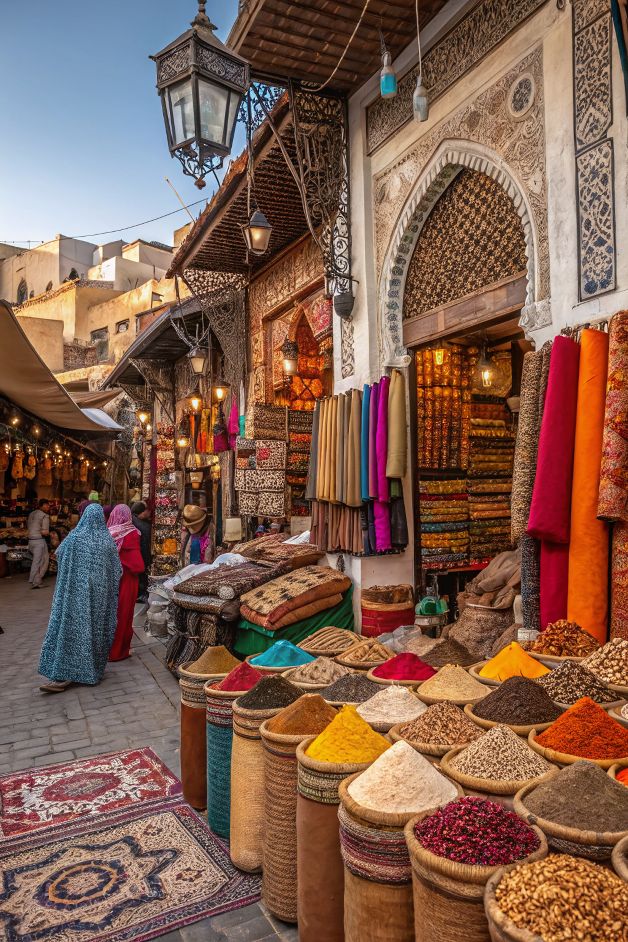
Marrakech — your starting point for the perfect 7-day Morocco itinerary
Many travelers wonder whether one week in Morocco is enough. The honest answer: it is ideal for a first visit. Five days forces you to skip either the desert or Fes. Ten days lets you linger but is harder to schedule around work. Seven days gives you exactly enough time to experience four distinct regions — the red city, the mountains, the Sahara, and the imperial north — without spending every morning in a minivan.
The route below covers roughly 1,400 km. You will not drive all of it yourself; the key Marrakech-to-desert stretch is best handled by a shared or private tour (more on that below). From Merzouga onward, comfortable buses and short transfers do the rest.
Fly into Marrakech and out of Tangier (or Fes) to avoid retracing 600 km on your last day. Open-jaw tickets on Ryanair or Royal Air Maroc are often the same price as round-trips. This single decision saves you an entire travel day.
Before You Go — Essential Preparation
A little groundwork makes your 7 day morocco itinerary dramatically smoother. Handle these basics before boarding your flight:
- Visa: Citizens of 70+ countries (EU, US, UK, Canada, Australia) get 90-day visa-free entry. Check your passport has at least 6 months validity.
- Currency: Moroccan Dirham (MAD). Withdraw from ATMs at the airport — they give the best rate. Cards are accepted at hotels and larger restaurants, but souks and small riads are cash-only.
- SIM card: Buy a Maroc Telecom or Inwi tourist SIM at the airport for 30-50 MAD. A 10 GB data plan costs around 50 MAD and covers the entire week, including decent signal in the desert.
- Clothing: Morocco is moderate but conservative. Pack lightweight long trousers, a scarf (useful in mosques and as sun protection), and layers for cold desert nights and mountain passes.
- Best season: March-May and September-November. Summer (June-August) pushes Marrakech above 45°C. Winter is mild on the coast but cold in the Atlas and desert at night.
Day-by-Day: Your Perfect Week in Morocco
Day 1: Arrive in Marrakech — Medina, Souks & Jemaa el-Fna
Land at Marrakech Menara Airport (RAK) and take a petit taxi or airport transfer to your riad in the medina (15-20 min, 70-100 MAD). Not sure which neighborhood to book? Our guide to where to stay in Marrakech breaks down the five best areas. Settle in, then spend the afternoon getting gloriously lost in the labyrinth of the old city.
- Morning/Afternoon: Walk through the souks toward Ben Youssef Madrasa (70 MAD entry), one of North Africa's most photogenic buildings. Continue to the Museum of Marrakech and the nearby Almoravid Koubba.
- Late Afternoon: Visit Bahia Palace (70 MAD) for its stunning zellige tilework and carved cedar ceilings. Join a guided medina walking tour to learn the stories behind the architecture — guides explain centuries of craft traditions you would otherwise walk past.
- Evening: Head to Jemaa el-Fna square at sunset. Watch snake charmers, musicians, and storytellers as the food stalls fire up. Eat at one of the open-air stall rows — a full meal with fresh orange juice costs 40-60 MAD.
Budget estimate: Riad (350-600 MAD), food (100-150 MAD), entries (140 MAD), transport (100 MAD). Total: ~700-1,000 MAD.
- Guided Medina, Souks & Monuments Walking Tour
- 4.7 stars — Skip the line, local expert guide
- Free cancellation up to 24h before
Day 2: Atlas Mountains & Ait Benhaddou
Depart Marrakech early (7:00-8:00 AM) heading southeast. Today combines two of Morocco's most dramatic landscapes: the High Atlas mountain pass and the ancient fortress village of Ait Benhaddou.
- Morning: Drive over the Tizi n'Tichka pass (2,260 m) on the N9 — the highest paved road in North Africa. Stop at roadside viewpoints where Berber vendors sell minerals and fossils. The scenery shifts from olive groves to bare red rock within an hour.
- Midday: Arrive at Ait Benhaddou, the UNESCO-listed ksar (fortified village) famous as a filming location for Gladiator, Game of Thrones, and dozens of other productions. Cross the shallow river on foot and climb to the top for panoramic views of the valley.
- Afternoon: Continue to Ouarzazate (30 min further) or stay near Ait Benhaddou. Visit Atlas Studios if time allows — it is one of the world's largest film studios. Overnight in a guesthouse or kasbah hotel.
Budget estimate: Accommodation (300-500 MAD), food (100-150 MAD), Ait Benhaddou entry (free, tip guide 50 MAD), transport/fuel share (250-400 MAD). Total: ~700-1,100 MAD.
Day 3: Road to the Sahara via Todra Gorge
Today is a long but visually spectacular driving day — roughly 300 km from Ouarzazate to Merzouga through the Dades Valley and past Todra Gorge. Most travelers do this as part of a 3-day desert tour departing from Marrakech, which handles all logistics.
- Morning: Drive through the Valley of Roses (at its best in April-May) and the Dades Gorge, where the road winds between towering canyon walls. Stop for photos at the hairpin turns.
- Midday: Visit Todra Gorge — a 300-meter-deep slot canyon only 10 meters wide at its narrowest point. Walk along the river between the sheer limestone walls. Lunch at one of the canyon-floor restaurants (tagine 40-60 MAD).
- Afternoon: Continue east through Erfoud (the fossil capital of Morocco) and Rissani to reach Merzouga by late afternoon. Check into your desert camp or auberge on the edge of Erg Chebbi.
- Evening: Optional camel ride into the dunes for sunset (included in most tours, or bookable separately for 150-250 MAD).
Budget estimate: Accommodation (included in tour or 300-500 MAD), food (100-150 MAD), transport (included or 300-500 MAD). Total: ~400-1,100 MAD.
- Marrakech to Merzouga: 3-Day Desert Safari with Meals & Camp
- 4.6 stars — Camel trek, stargazing, all transport included
- Covers Days 2-4 of this itinerary
The towering dunes of Erg Chebbi — the highlight of any Morocco itinerary
Day 4: Merzouga — Sahara Desert Experience
This is the day most travelers call the highlight of their morocco travel itinerary. You have an entire morning in the Sahara before heading north.
- Sunrise: Wake before dawn (5:00-5:30 AM depending on season) and climb the dunes behind your camp. Watching the sun rise over Erg Chebbi — an ocean of orange sand stretching to Algeria — is genuinely one of North Africa's great moments.
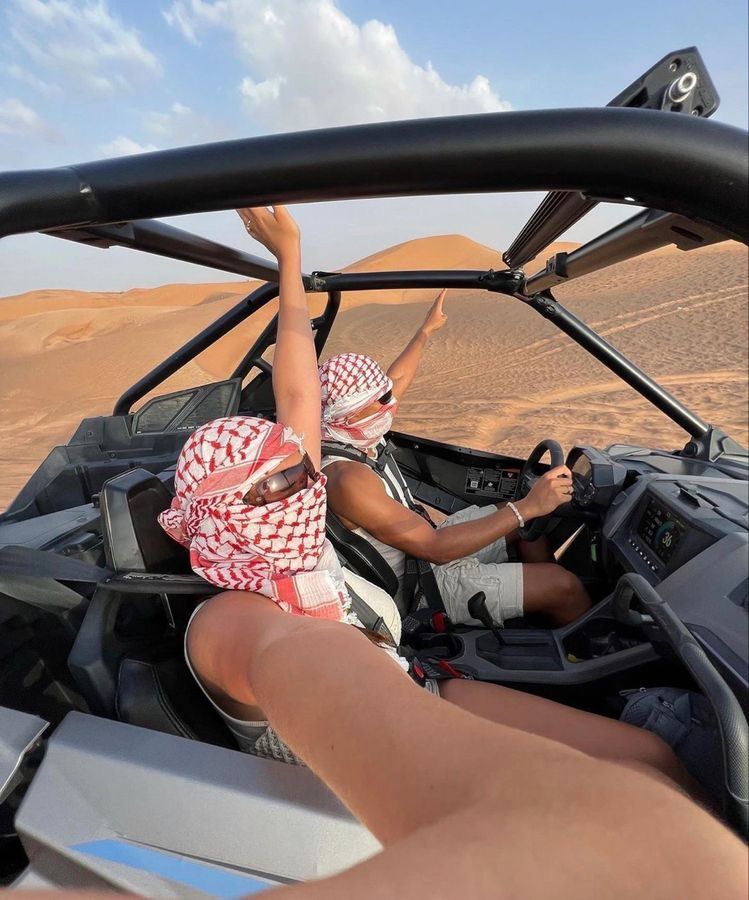
- Morning: Return to camp for breakfast. If your schedule allows, add an optional ATV/quad ride across the dunes (300-500 MAD for 1-2 hours) or visit a nomad family for mint tea.
- Afternoon: Depart Merzouga heading north toward Fes. The drive is approximately 450 km (7-8 hours) via the N13 and N8 through Midelt and the Middle Atlas cedar forests. Alternatively, take the overnight CTM or Supratours bus from Errachidia to Fes (departing around 20:00, arriving 04:00-05:00, ~180 MAD).
- Evening: Arrive in Fes late evening and check into your riad in Fes el-Bali (the old medina).
Budget estimate: Breakfast (included), quad ride optional (400 MAD), transport to Fes (180-500 MAD), riad (350-700 MAD). Total: ~530-1,600 MAD.
During peak season (October-November, March-April), the best luxury desert camps sell out 2-3 weeks ahead. Mid-range camps fill up 1 week ahead. Book early to secure your preferred camp, especially if you want a private tent with en-suite bathroom.
Day 5: Fes — Medina, Tanneries & Artisan Quarters
Fes el-Bali is the world's largest car-free urban area — a living medieval city with 9,000 narrow alleys. A local guide is strongly recommended here; even experienced travelers get disoriented without one.
- Morning: Begin at Bab Boujloud (the Blue Gate), the main entrance to the medina. Walk through the spice and textile souks to the Al-Qarawiyyin Mosque — founded in 859 AD, it is the world's oldest continuously operating university. Non-Muslims cannot enter but can admire the courtyard through the doors.
- Midday: Visit the Chouara Tanneries, where leather has been dyed by hand using the same methods for over 1,000 years. View from a leather shop terrace above (they will offer you mint leaves to offset the smell). Continue to the Bou Inania Madrasa (30 MAD) for some of Morocco's finest carved stucco and zellige.
- Afternoon: Explore the Nejjarine Museum of Wooden Arts (20 MAD), housed in a beautifully restored funduq (caravansary). Walk through the brass and copper workers' quarter, where artisans hand-hammer trays and lanterns as they have for centuries.
- Evening: Dine at a rooftop restaurant in the medina — many offer panoramic views over the old city as the call to prayer echoes across the skyline. Try pastilla (sweet-savory pigeon or chicken pie), the signature dish of Fes.
Budget estimate: Riad (350-700 MAD), food (120-180 MAD), guide (300-500 MAD for half-day), entries (50-70 MAD). Total: ~820-1,450 MAD.
- Walking tours, cooking classes & day trips from Fes
- Navigate the medina with a certified local guide
- Free cancellation on most activities
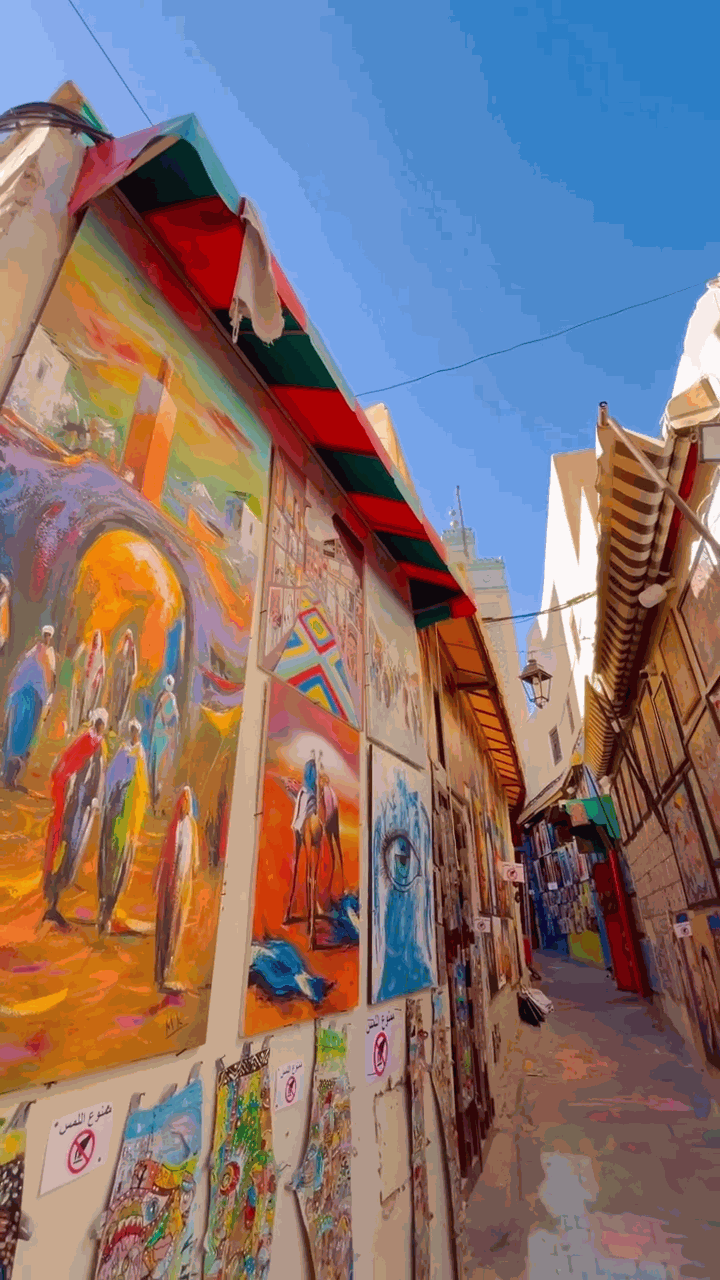
The vibrant streets of Fes — a UNESCO World Heritage medina
Day 6: Fes to Chefchaouen — The Blue Pearl
The drive from Fes to Chefchaouen takes around 4 hours (200 km) through rolling Rif mountain farmland. Depart after breakfast to arrive by early afternoon.
- Morning: Enjoy a final stroll through Fes — pick up any last souvenirs (Fes is the best city for leather goods, ceramics, and brassware). Depart by 9:00-10:00 AM.
- Early Afternoon: Arrive in Chefchaouen. Drop bags at your guesthouse (many have Rif mountain views from their terraces) and head straight into the blue-washed medina. The entire old town is painted in shades of blue — periwinkle, cobalt, powder blue, and indigo.
- Afternoon: Walk to the kasbah at Place Outa el-Hammam (the main square, entry 60 MAD), explore the Ras el-Maa waterfall at the eastern edge of town where locals do laundry on the rocks, and lose yourself in the photogenic alleyways.
- Evening: Chefchaouen is one of Morocco's most relaxed towns. Sit at a café on the main square, try local goat cheese with fresh bread, and watch the light change on the blue walls as the sun sets behind the mountains.
Budget estimate: Guesthouse (250-500 MAD), food (100-150 MAD), transport Fes-Chefchaouen CTM bus (75 MAD) or shared taxi (80-100 MAD), kasbah (60 MAD). Total: ~485-810 MAD.
- Guided blue medina walks, hiking & Rif mountain excursions
- Photography tours through the most Instagrammed streets
- Free cancellation available
Chefchaouen — Morocco's famous blue pearl nestled in the Rif Mountains
Day 7: Chefchaouen — Morning Hike & Departure
Your final day in Morocco offers two options depending on your flight home.
- Option A — Morning in Chefchaouen: Hike up to the Spanish Mosque (Mosquee Bouzaafar) on the hill above town for a panoramic sunrise view over the entire blue medina and Rif mountains. The walk takes 20-30 minutes and is the single best viewpoint in town. Return for breakfast at your guesthouse.
- Option B — Tangier departure: If flying out of Tangier, take the morning CTM bus (2.5 hours, 50 MAD) or shared taxi. Tangier Ibn Battouta Airport has direct flights to many European cities. Spend a few hours in Tangier's kasbah or the revitalized waterfront before your flight.
- Option C — Return to Marrakech: If your return flight is from Marrakech, take a CTM bus to Casablanca (5.5 hours, 140 MAD), then the high-speed Al Boraq train to Marrakech (2.5 hours, 200 MAD). It is a long day but avoids an internal flight.
Budget estimate: Transport to airport (50-350 MAD depending on route), food (80-120 MAD), morning activities (free). Total: ~130-470 MAD.
Flying out of Tangier saves you a full travel day compared to returning to Marrakech. Budget airlines like Ryanair, Transavia, and Air Arabia operate frequent direct flights from Tangier to major European airports. Check open-jaw pricing before booking your round-trip — it is often identical.
Essaouira — a charming coastal detour if you have extra days in Morocco
Complete Budget Breakdown — 7 Days in Morocco
Here is what your best morocco itinerary will realistically cost per person, based on a mid-range travel style (comfortable riads, eating well, using a mix of tours and public transport).
Mid-Range Budget (per person, 7 days)
- Accommodation: 2,500-4,000 MAD (riads and guesthouses, double occupancy)
- Food: 700-1,100 MAD (mix of street food, local restaurants, and one or two splurge dinners)
- Transport: 1,200-2,500 MAD (desert tour + buses + shared taxis)
- Activities & entries: 500-900 MAD (guided tours, monument fees, camel ride)
- Miscellaneous: 300-500 MAD (SIM card, tips, souvenirs)
- Total: 5,200-9,000 MAD (520-900 USD / 480-830 EUR)
Budget travelers staying in hostels, eating street food, and using public CTM buses can manage on 3,500-4,500 MAD for the week. Luxury travelers booking private riads, a private 4x4 desert tour, and upscale restaurants should budget 15,000-25,000 MAD. For a detailed breakdown of every expense category, read our complete Morocco travel cost guide.
The biggest variable is the desert segment. A shared 3-day Marrakech-to-Merzouga group tour starts around 1,200 MAD per person with meals and camp included. A private 4x4 tour for two starts around 4,500 MAD total. Both cover Days 2-4 of this itinerary, including accommodation, meals, and transport.
Practical Tips for Your Week in Morocco
Getting Around
Morocco has an excellent intercity bus network. CTM and Supratours operate comfortable, air-conditioned coaches between all major cities. Book CTM tickets online at ctm.ma up to 2 weeks in advance — popular routes (Fes-Chefchaouen, Marrakech-Essaouira) sell out on weekends.
Grands taxis (shared long-distance taxis, usually Mercedes sedans) are faster than buses but cramped. They depart when full (6 passengers). You can buy extra seats for more space. Trains connect Marrakech, Casablanca, Rabat, Fes, and Tangier and are reliable and affordable.
Food and Dining
Moroccan cuisine is one of the trip's highlights. Expect to pay 30-60 MAD for a tagine at a local restaurant, 10-20 MAD for a sandwich or msemen at a street stall, and 5 MAD for fresh orange juice on every corner. Restaurant meals at tourist-facing rooftop spots cost 80-150 MAD per person. Always agree on the price before sitting down at Jemaa el-Fna stalls.
Safety and Scams
Morocco is generally safe for tourists, but petty scams exist in tourist areas. Common ones: fake guides leading you to a carpet shop, inflated prices at Jemaa el-Fna food stalls, and "helpful" strangers offering directions then demanding payment. Politely decline unsolicited help, agree on prices beforehand, and use official guides (identifiable by their brass badge).
Haggling
Haggling is expected in souks and with taxi drivers. A reasonable starting offer is 40-50% of the first asking price. Stay friendly, walk away if the price does not suit you, and remember that a few dirhams mean more to the vendor than to you. Fixed-price shops exist in all major cities if you prefer not to negotiate.
Frequently Asked Questions
Ready to Plan Your Morocco Week?
Use our AI-powered tools to build a personalized itinerary with real-time budget estimates and booking links.